
Home / Services
What We Do
Waterproofing Services Built to Last
Internal wet areas through to below-ground tanking — detailed to Australian Standards, on residential, commercial and industrial projects across the country.
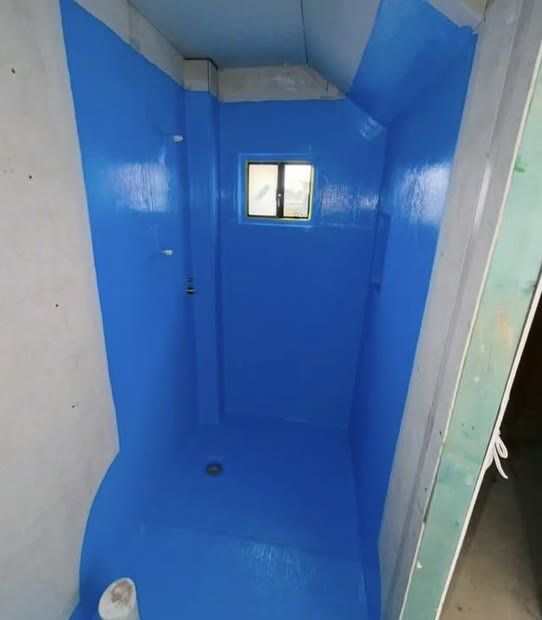
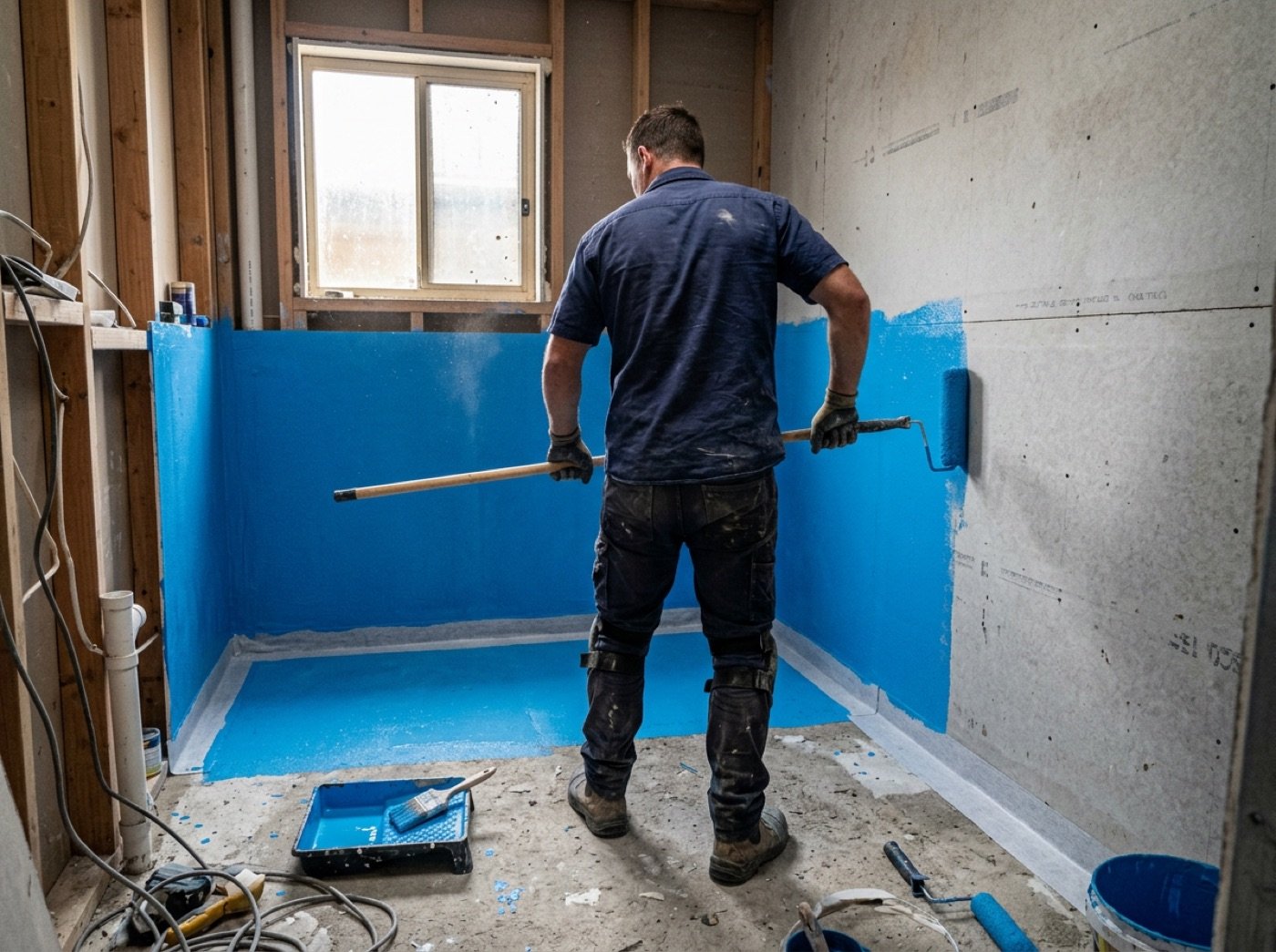
Internal Wet Areas
Bathrooms, Ensuites & Laundries
Wet area waterproofing detailed to AS 3740, covering bathrooms, ensuites, laundries and shower recesses before a tile ever goes down.
Bond breakers to movement joints, fillets to internal corners and upturns taken to the correct height around hobs, walls and penetrations — then flood tested before handover.
- AS 3740 compliant build-up. Primers, membranes and reinforcing to the manufacturer's system.
- Bond breakers & fillets. Movement joints and internal corners detailed properly, not skipped.
- Correct upturn heights. Walls, hobs and penetrations sealed to height, not just the floor.
- Flood tested. Every wet area holds water before the tiler is let loose on it.
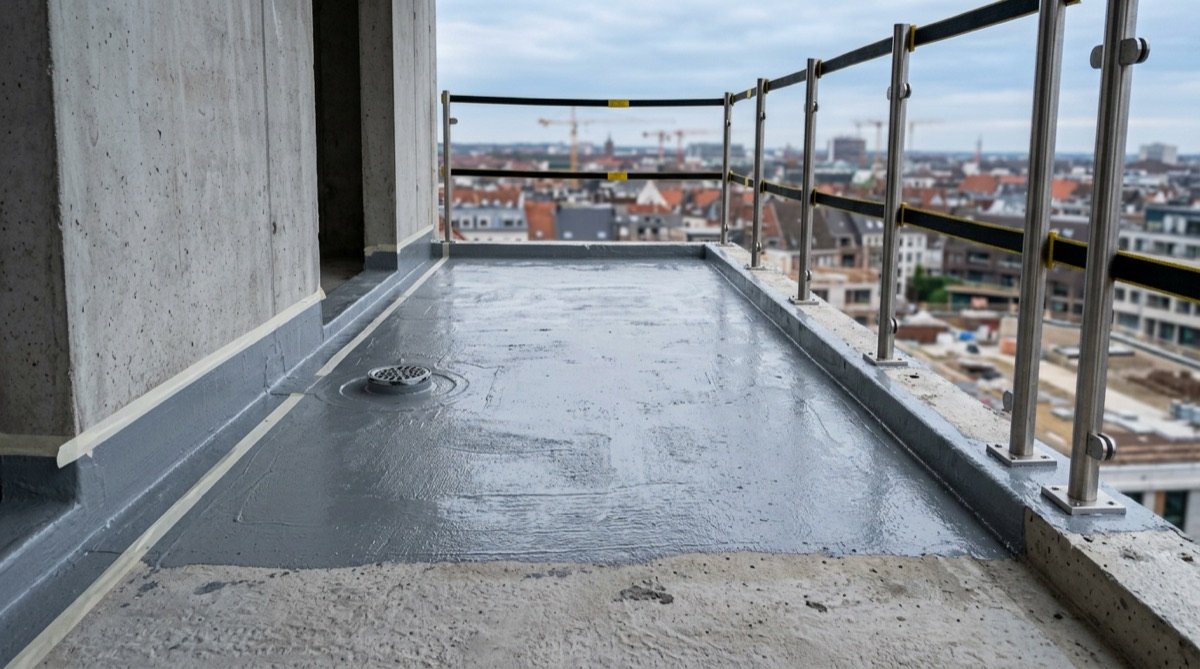
Balcony & Terrace
External Living Spaces That Take Real Weather
Balconies and terraces are detailed to AS 4654.2, with falls run to drainage points so water never sits where it shouldn't.
Movement joints are built into the system from the start, and tile-over waterproofing membranes are selected to suit the finish going over the top.
- AS 4654.2 detailing. External above-ground waterproofing done to the standard.
- Falls to drainage. Correctly graded so water moves off the deck, not into it.
- Movement joints. Built in where the structure needs to move, not fought against.
- Tile-over systems. Membrane matched to the finish and traffic the balcony will see.
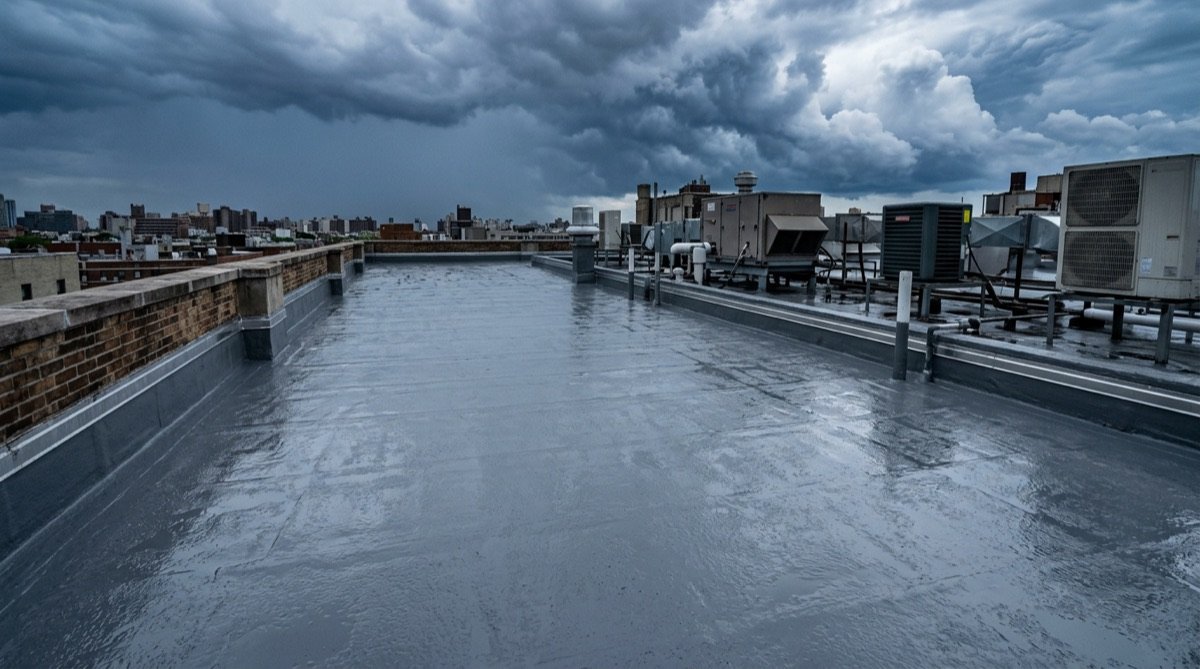
Roof Waterproofing
Flat Roofs, Parapets & Box Gutters
Liquid-applied membranes built up to spec across flat and low-pitch roofs, parapets and box gutters — the places most roof leaks actually start.
Every penetration, upstand and junction is detailed and reinforced before the membrane goes down, so the roof performs as a system rather than a patchwork of fixes.
- Liquid membranes. Seamless coverage across flat and low-pitch roof decks.
- Parapets detailed. Upturns and capping junctions sealed properly.
- Penetrations sealed. Pipes, vents and fixings treated before membrane application.
- Box gutters. Falls and overflow points checked, not just coated over.
Remedial & Leak Repair
Fixing What Someone Else Got Wrong
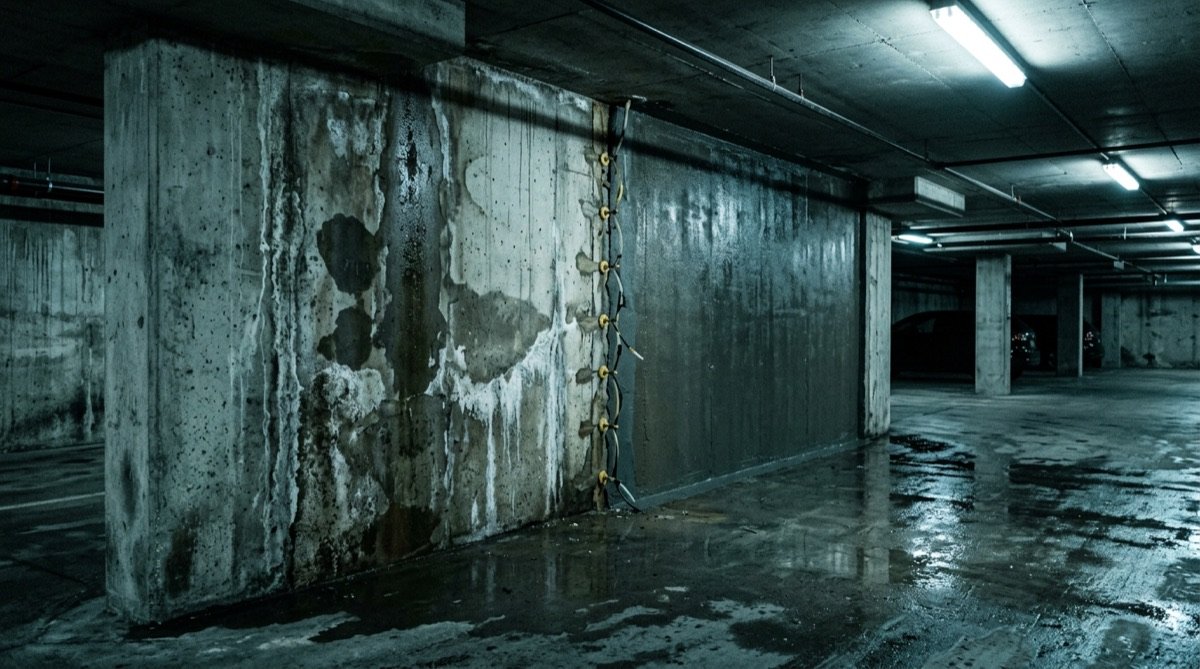
Leak investigation to find the actual source, then a repair scope for failed membranes — not just a surface patch that fails again in twelve months.
Negative-side treatment and crack injection where water is coming through from the outside, including basements and car parks where access to the source side isn't possible.
- Leak investigation. Tracing water back to where it's actually entering.
- Failed membrane repair. Removing and replacing what's stopped working.
- Negative-side treatment. Sealing from the inside when the outside face can't be reached.
- Crack injection. Basements and car parks sealed against ongoing water ingress.
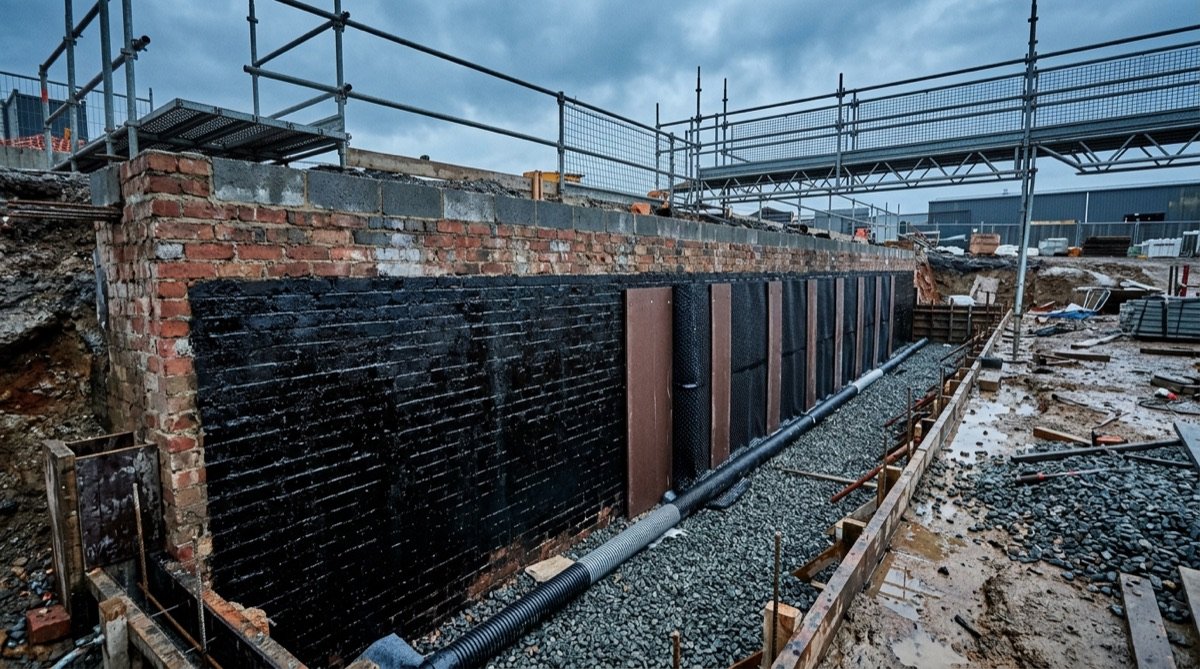
Below Ground & Retaining Walls
Tanking & Retaining Wall Systems
Full tanking systems to below-ground structures and retaining walls, keeping water out before it ever becomes a habitable-space problem.
Drainage cell and protection board installed over the membrane to take the load off it, with agi drain run to carry water away from the structure altogether.
- Tanking membranes. Continuous coverage to below-ground walls and slabs.
- Drainage cell. Relieves hydrostatic pressure off the membrane face.
- Protection board. Guards the membrane through backfill and construction traffic.
- Agi drain. Carries groundwater away from the structure.
Planter Boxes
Root-Resistant Systems That Actually Drain
Planter boxes are waterproofed with root-resistant membranes, because ordinary systems don't stand up to what plant roots do over time.
A drainage layer sits above the membrane so water moves through instead of pooling against it, protecting both the planting and the structure below.
- Root-resistant membranes. Built to withstand ongoing root contact.
- Drainage layers. Excess water moved away from the membrane face.
- Upturns to height. Edges and junctions sealed above soil level.
- Structure protected. Slabs and adjoining areas kept free of water damage.
Common Questions
Waterproofing FAQs
How long does waterproofing take?
It depends on the size and complexity of the area, the number of coats specified and cure time between them. A standard ensuite is generally quicker than a full bathroom or a balcony with movement joints and falls to correct. We'll give you a timeframe in writing as part of the quote.
How long before tiling can start?
Membranes need full cure time between and after coats before they're flood tested, and tiling only starts once that flood test has passed. We'll confirm the exact timing for your job so your tiler can plan around it.
Do you provide a waterproofing certificate?
Yes. Wet areas are flood tested and documented with a photo record, and you receive a waterproofing certificate on completion.
Do you do repairs on someone else's work?
Yes. Remedial and leak repair is one of our core services — we investigate the cause of the leak, then scope a repair to fix it properly rather than just patching the symptom.
Do you service my area?
We work across all of Australia on residential, commercial and industrial projects. Get in touch with your suburb or location and we'll confirm availability.
Free, No Obligation